The Lydian Node Network
Neurons in a network, not copies of a database.
A Lydian Node is a small, sovereign computer that runs nine layers under one conformance contract. Each node collects observations stamped with what was seen, by whom, when and where. The network integrates those observations rather than copying them into one central store.
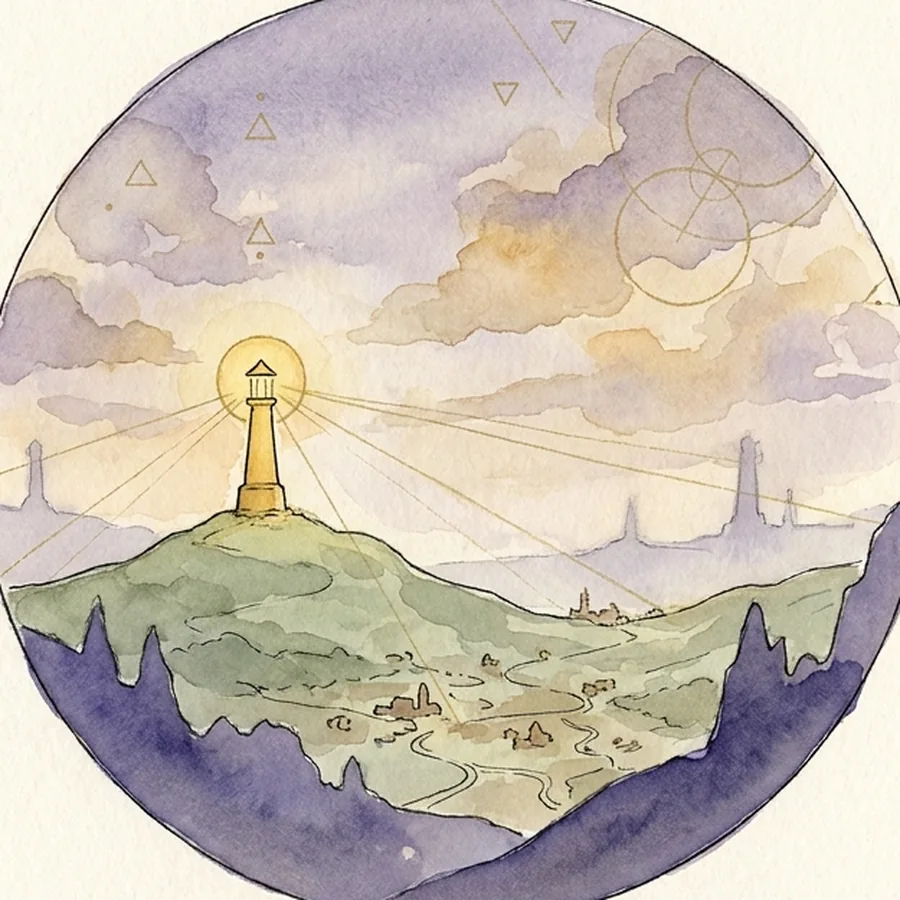
Nine layers, L0 to L8
From the mathematics up to what people use.
Status as of late 2026. "Has run" means the layer ran on our small founding network of nodes, which we are now rebuilding on new infrastructure. Nothing here is open for public enrollment yet.

Foundation
The mathematics and shared primitives every other layer rests on: constants, geometry and the encodings nodes use to agree with each other. Published as reference libraries.

Identity (PrimeID)
The Genesis ceremony that creates a person's PrimeID, witnessed and signed. Its security review was closed before the first founders enrolled.

Clock
Attested time. Nodes keep and compare time with each other, anchored where possible to GPS, so every observation carries a timestamp others can check.

Wallet
Authority and permissions: what an identity may do, under which subscription and within what budget. Each grant is a signed record, so permission can be checked rather than taken on trust.

Memory
A prime-indexed memory with relational links between records, replicated between nodes so a person's knowledge is not trapped on one machine.

Vault
The node's front door for data: every feed and event passes through the Vault's firewall and is inspected there, so nothing reaches the rest of the node unchecked.
TribNet
Node-to-node transport: a purpose-built encrypted mesh, so nodes talk to each other directly rather than through a central server.

Conductor
The node's own agent and gateway. It routes work to a local model first and to outside models only within the limits the owner sets, and it records which model answered what.

Applications
What people actually use on top of the node: reports, living documents, a personal journal, and in time the services a MicroCity runs on. Each one has to meet the same conformance contract.
One observation, five facts
Every fact remembers where it came from.
The unit the network shares is an observation: a value, its source, when it was taken, where, and the PrimeID of the node that took it. Because every observation carries its own provenance, two nodes can disagree and each show why, and a reader can always trace a number back to who saw it.
The same discipline runs through every layer. Permissions are signed grants, time is attested, and each step an agent takes is written to an audit trail that cannot be rewritten. The aim is a network whose claims can be checked rather than taken on trust.
The observation
(value, source, timestamp, location, node_PrID)
Federation unit for every node. Integrated across the network, never silently overwritten.
Node sizes
Central, regional, household and micro. A small device can carry a person's node in their pocket and defer to a larger one at home.
Built in order, claimed only when it runs.
We publish what has run and what has not. If you want to go deeper into the architecture, it is worth a working session. Reach us.